How to set up a shared family drop zone in a small entryway
· Editorial team newswithryanchicago.com
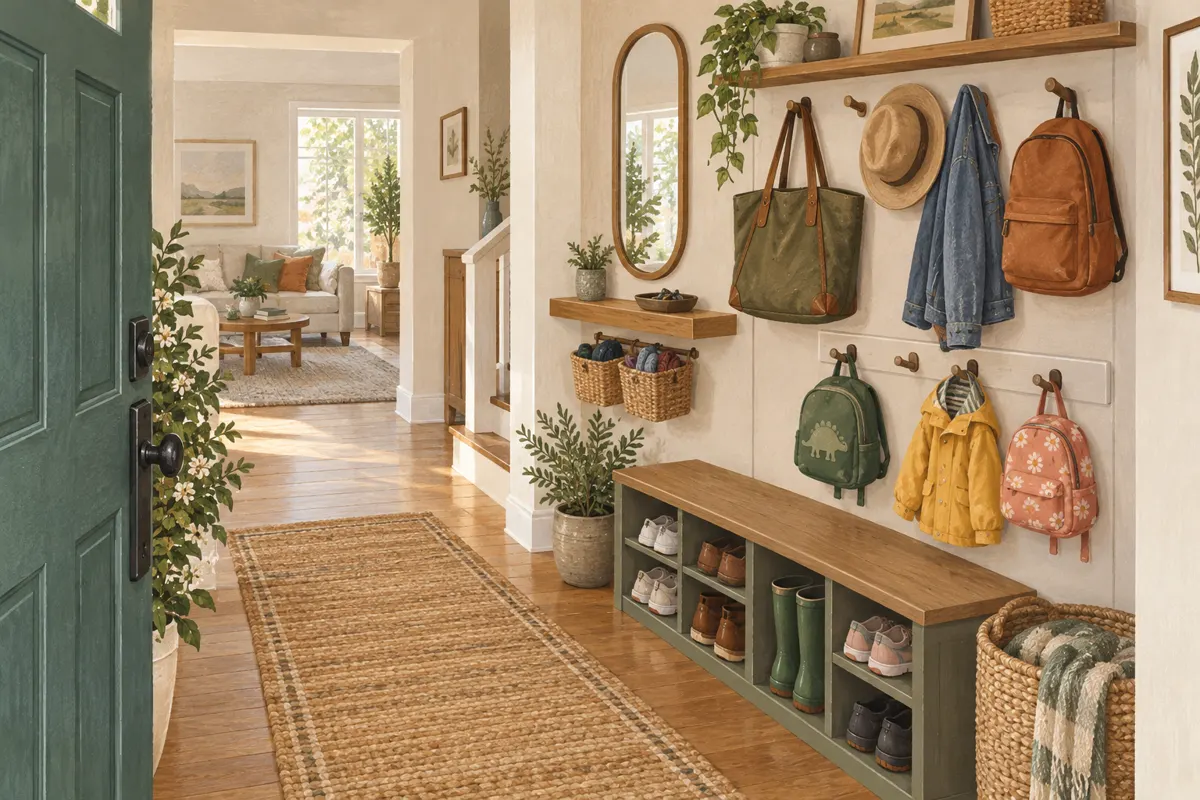
Set up a shared family drop zone with wall hooks for bags, a shallow shelf for keys and one contained spot for everyday shoes. Give each person an assigned space, keep the walking route clear and reset the area each evening. The proposed layout and routine below can help a household manage different school and work schedules without filling the entrance with storage furniture.
Start with the doorway and the daily essentials
Before choosing storage, open the front door fully and check where people walk, turn and remove their shoes. Include any nearby closet doors. A piece that fits against the wall may still interfere with an open door or a person carrying a backpack.
Make a short inventory of what actually comes through the entrance each day. Narrow-entryway guidance emphasizes a landing place for keys and wallets, hooks for outerwear and bins for small accessories. Keep those everyday functions at the center of your plan.
- Daily arrivals: work bags, school backpacks, keys and the shoes currently being worn.
- Tomorrow’s departures: packed bags, permission slips and items that must leave with someone.
- Storage elsewhere: spare shoes, occasional sports equipment and out-of-season coats.
Build a compact layout along one wall
Wall hooks and floating shelves provide storage without adding furniture legs to the floor. A bench with shoe storage combines a seat and a place for footwear, but it belongs in the plan only if there is enough room to use it comfortably.
- Choose one wall beside the entrance, outside the door’s swing, for the main drop zone.
- Place bag hooks where household members can reach them. Check the space with the actual bags hanging, since loaded backpacks project farther than empty hooks.
- Add a shallow shelf or wall organizer for a key tray and a small paper slot.
- Put a contained shoe rack or tray below or beside the hooks. Leave room for hanging bags above it.
- Add seating only if someone can sit and put on shoes without blocking the route through the entrance.
Follow the storage hardware’s mounting instructions and weight limits. If drilling is restricted, consider over-the-door storage, checking that the door still closes and opens freely.
Give every person a clear storage assignment
Hooks at different heights can accommodate adults and children, while labeled drawers or bins distinguish storage spaces. Make children’s everyday storage reachable so they can put away their own belongings.
Our proposed assignment is one bag hook, one small accessory container and one shoe position per person. Use names or a simple color cue to make ownership obvious. Keep the same assignments even when someone leaves earlier or arrives later than everyone else.
Separate shared belongings from personal ones. Household keys can have a dedicated tray, while each person’s wallet or transit pass stays in their own container. If space cannot accommodate everyone’s bags, assign entryway hooks to the bags needed next and choose a specific nearby home for the others.
Make tomorrow’s departures easy to spot
A wall-mounted organizer can hold keys, mail and reminders. In a small family entrance, give papers a defined place instead of allowing them to cover the landing shelf.
- Put papers requiring action in one slim slot, then move completed forms into the correct bag.
- Keep only the next departure’s essentials on each person’s hook.
- For an unusual departure, such as a sports practice, place a short reminder with that person’s belongings.
- Keep lunches that need refrigeration in the refrigerator and use a reminder beside the bag.
Use a five-minute evening reset
Try this proposed five-minute routine at a convenient evening transition. Anyone arriving later can repeat the same steps for their own space.
- Minute one: Return loose shoes to their assigned positions and clear the walking route.
- Minute two: Hang bags and move extra coats or equipment to their usual storage.
- Minute three: Sort papers and put keys and small accessories in their assigned places.
- Minute four: Check tomorrow’s school, work and activity needs; prepare what can be packed now.
- Minute five: Remove anything that does not belong in the entryway and leave the landing shelf ready for the next arrival.
If the same item repeatedly lands on the floor, adjust its storage location or reduce what the zone holds. Move seasonal accessories elsewhere when they are no longer needed. A drop zone should hold the household’s current daily load, with enough space to put things away easily.