How to freeze fresh herbs in portions you can use while cooking
· Editorial team newswithryanchicago.com
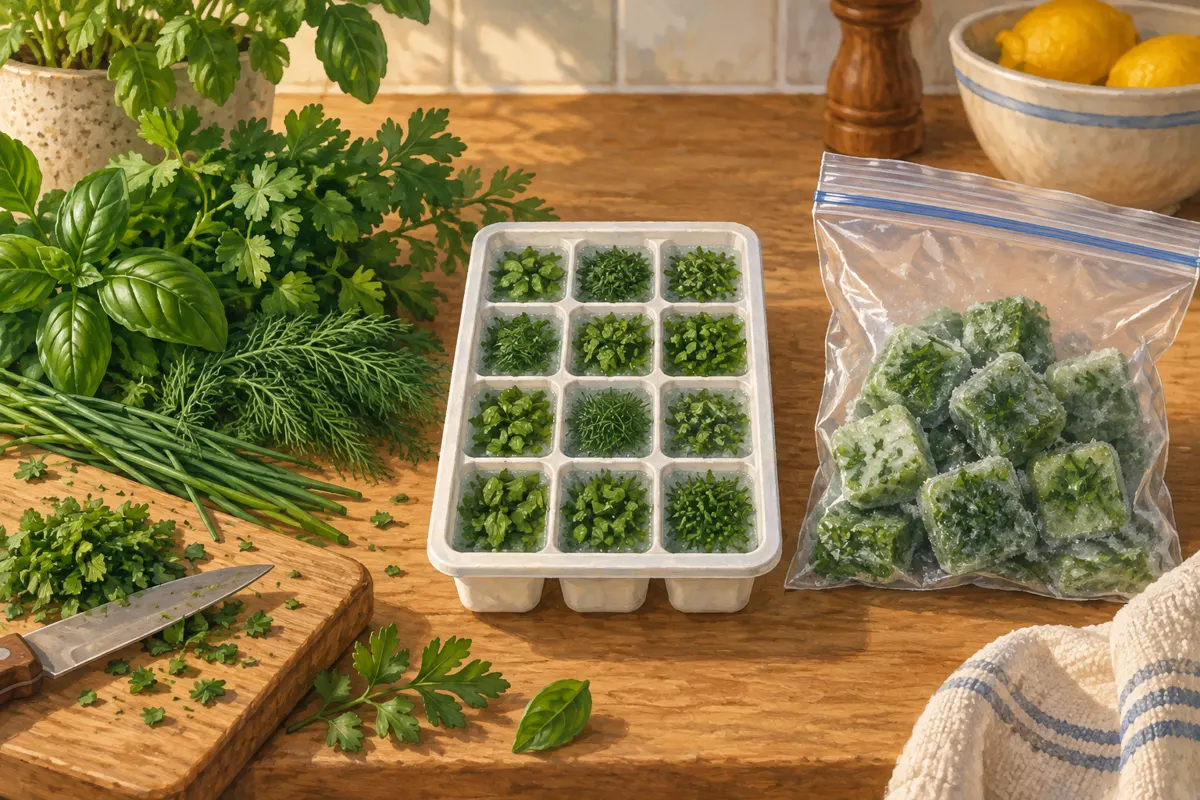
Freeze fresh herbs by washing and drying them, dividing them into small cooking portions, and sealing them in freezer bags once frozen. You can wrap a few leaves or sprigs together, or chop the herbs and freeze them in an ice cube tray with a little water or oil. Plan to use them in cooked dishes: thawed herbs become limp and usually do not work well as a garnish.
Wash and dry before you portion
Start while the herbs are still fresh. Parsley, cilantro, dill, basil and chives can be frozen for cooking, as can rosemary, thyme, oregano and sage. Keep different herbs separate during preparation so you can choose what goes into each dish later.
- Wash the herbs gently, then let the water drain away.
- Pat them dry with paper towels, handling tender leaves gently.
- Remove tough stems if you would not normally include them in the dish.
- Leave small sprigs whole for packets, or chop the leaves to the size you usually use when cooking.
Dry the herbs before choosing either method. For cubes, you will add a measured amount of liquid afterward; water left from washing makes that amount harder to control.
Choose portions that match your meals
A useful editorial proposal is to measure one tablespoon of chopped herbs into each tray well. This gives you a repeatable starting portion, rather than a cube whose herb content you have to guess. Use a smaller measure if you usually cook small servings.
Measure the herbs before adding water or oil. The finished cube's size does not tell you how much herb it contains, especially when tray wells vary. If you choose two tablespoons per portion instead, record that on the bag.
For whole herbs, wrap a few leaves or sprigs in freezer wrap and place the packets inside a freezer bag. This method suits herbs you prefer to chop when preparing a dish. Keep packets small enough that you can take out only what you need.
Make cubes with water or oil
Choose the liquid according to how you expect to cook. Water cubes fit soups, stews, broth and rice dishes where a little extra liquid is welcome. Oil portions fit sauces, eggs and pan dishes where oil is already part of the recipe.
- Put your measured chopped herbs into a clean ice cube tray.
- For water cubes, add just enough water to cover the herbs. For oil portions, use only enough oil to coat them.
- Place the tray in the freezer and leave it until the portions are solid.
- Remove the frozen portions and transfer them to a freezer bag or airtight freezer-safe container.
Keep herb-and-oil portions frozen until needed. Prepare them with clean equipment and move them into the freezer promptly; do not leave the mixture sitting out as a countertop herb oil.
Label and seal each batch
Press excess air out of freezer bags and close them securely. Label each batch with the herb name, freezing date, portion size and any added liquid. An editorial label proposal is: “Parsley — 1 tablespoon per cube — water — [freezing date].”
Keep the freezer at 0°F. Aim to use herb cubes within about three to six months for their best quality; that is a quality guide rather than an exact expiration date. Put older batches where you can reach them easily, and return the remaining portions to the freezer after taking what you need.
Add frozen portions to cooked dishes
Small herb cubes can go directly into cooking food without a separate thawing step. Allow the cube to melt and the herbs to spread through the dish before deciding whether to add more. Remember that each cube also contributes its water or oil.
- Stir a parsley water cube into soup or broth.
- Add basil portions to a simmering tomato sauce.
- Use a chive oil portion as part of the fat for scrambled eggs.
- Add thyme or rosemary portions to a stew or pan sauce.
For wrapped sprigs or leaves, remove one packet and chop the herbs for your cooked dish. Save fresh leaves for meals where an attractive garnish or firm texture matters.